Posts

Climate Justice matters
Image
Countries recently gathered for the 27th Conference of the Parties (COP27) with the aim of increasing awareness and stepping up efforts to solve the climate emergency and climate injustice ( UNFCCC, 2022 ). Figure 1 : COP27 What is climate justice?  It is the "merge of the environmental and civil rights movement" ( Bryant and Mohai, 2019 ) that is meant to safeguard not just the environment but also the people livelihoods depend on the endangered environment.  The historical global inequalities resulted from centuries of colonisation and exploitation serve as the foundation for the structural injustice that exists today. At COP6 in 2001, it was recognised that those have least responsible for greenhouse gas emissions ( Schlosberg and Collins, 2014 ) would bear the brunt of the burden of climate change.  Climate change contributes to structural injustice that already afflicts society, increasing multifaceted vulnerability of climate effects (e.g., socioecono...
What do environmental change intensify?

Image
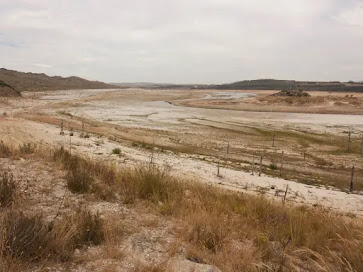
Existing hydrological variability  Variability is a key term in Africa in last post . The intensification of warming and precipitation will have an even greater influence on non-linear hydrological responses, such as fluctuating river discharge. In South Africa, the annual river flow has a median coefficient of variation (CoV) of 82%, which is 3.5 times higher than the global median of 31% ( McMahon et al., 2007 ). This has important implications for the water supply tied to food production. Rain-fed agriculture, which dominates in Sub-Saharan Africa, will face enormous issues due to the unpredictable and variable timing of rainfall  ( Taylor, 2017 ).   Figure1: Most of Cape Town's water is stored in Theewaterskloof Dam, which is drying what will happen in a warming world? • As the air warms, moisture-holding capacity increases at the Clausius-Clapeyron rate ( Held and Soden, 2006 ). A trend to an increasing extreme storms but with fewer, lighter precipitations ...

An introduction: water and food in Africa

Image
Before delving into the issues of water and food security in Africa, I'd like to begin the first blog with a meditation on the film The Boy Who Harnessed the Wind, a narrative about starvation in Africa. The main character, William, utilises his meagre knowledge to build a primitive windmill to pump water, even using his family's most precious bicycle, providing an oasis to his people. I could sense people struggling in Africa with water and a food, in irrigating their land to survive, and in their yearning for knowledge in the face of the famine.  The image of Africa has always been one of hardship in contrast to us, who enjoy access to resources. This reminds me of Wainaina's piece, where he critiqued the way that Western nations conceptualise Africa, urging us to abandon the preconceived notion that Africa is "backward" and instead draw the outlines of the romantic and evocative. In light of this, I would  write posts about the food and water situations and sh...